
The year I finally understood what to do with it all
How to turn chaos into art in an era of transgression

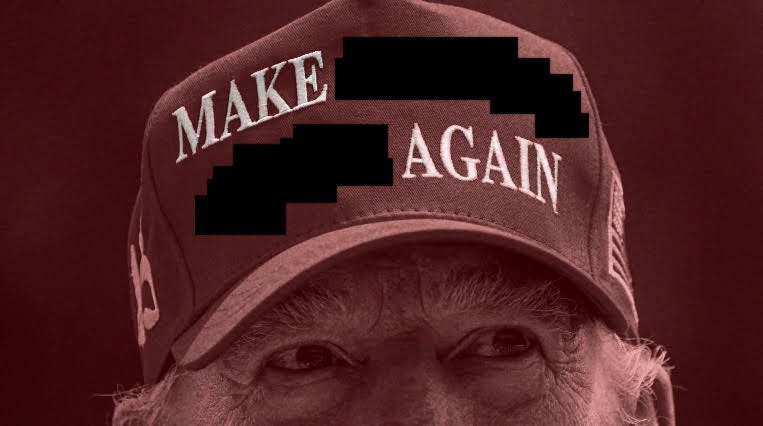
At the end of a year, a few things find their way to your body. You want to calm down. You want to summarize. Close some open ends, maybe. Leave some things behind. You want to look towards the horizon, feel something new.
That’s a bit of a challenge these days. You don’t have to be a genius to understand what’s on the horizon if young people can’t afford to move out of their parents’ place. Surprise: birth rates are dropping steeply.
I recently had a talk with my 15-year old son, who very matter-of-factly laid down what fields AI would likely be dominating, in order to determine what careers not to pursue, including stuff he actually likes. I felt a pang of sadness, realizing how different his outlook is from mine, at that age.
AI robbing us of invention and authorship, wars teaching us that the strong can do whatever they want, climate change doomsday scenarios making any kind of resistance seem futile. It would be strange if hope didn’t feel elusive some days.
But not all is grim.
There’s something about this era that feels… potent. I’m not thinking politics here. I’m thinking material.
Imagine this: you’re a writer during a peculiar moment in time, during which the leader of the world’s dominant empire performs power as spectacle, treats institutions with contempt, and rules through humiliation and attention.
If you were a contemporary of Caligula, the Roman emperor, do you think you would have understood your purpose as a writer? Would you have seized the opportunity, grasped the width of your responsibility? Would you have been able to write a play that captured the dynamics of your time?
Imagine watching, in real time: a leader who violates laws while claiming to defend the people, channels public frustration toward the establishment for his own gain, and turns personal loyalty into political capital.
Like Julius Caesar. Do you think you could have written fiction that took on the truth of that experience?
Or, picture being governed by a narcissist who was obsessed with image and adoration, who governed like a sideshow spectacle, who surrounded himself with suck-ups, and punished critics.
That’s Nero: the politician as performance artist. Would you have been able to chronicle him without allowing contempt to poison your story? Or, refrain from praise out of fear of losing your position, or worse?
If you think you would have, you’d be immortal at this point. You’d be Tacitus.
Tacitus’ contempt for tyranny is evident - but he reins it in. He quotes speeches, records decisions, notes silences, tracks details.
By chronicling Nero without bias, he shows us how corruption becomes normal, how quickly outrage fades, and how institutions go hollow without making a sound.
His method is ice-cold. And that’s why Tacitus is trusted, still.
I remember how Bowling for Columbine made me an instant Michael Moore fan. I read his books. I felt as though he articulated a lot of the things I was feeling. I trusted him, I felt guided by him. Then, I watched Fahrenheit 9/11. And just like that, my love was gone.
I didn’t like Bush the younger more than any other artist at the time, but that film was all about ridiculing Bush. It tried so hard to make him look dumb and weak, using simplistic, obvious editing and sound design. I was simply watching a bully go after a target, in a medium where the bully had absolute control. Moore was a hero no more.
He’s not a bully on par with the present bully-in-command, far from it. But the same rule applies to both: be a bully, and the only people who’ll get behind you are the ones who already agree with you. So, what, exactly, did you gain? Besides louder supporters?
And what’s more: history won’t trust you.
If you can’t transform your contempt into something precise, a person 500 years from now will read you with a great deal of suspicion. She will think your obvious agenda may cause you to lie, just to get your point across. And that loss of credibility would please the current ‘leader of the free world’ to no end.
This principle is not just applicable on a chronicler. You can write fiction, screenplays, novels, essays, and still target current themes with precision, avoiding becoming like him: a bully. A name-caller.
Is America facing inevitable decline, much like Rome? Could America even be on the brink of collapse?
Maybe. There are signs, for sure. Collapse, let’s pray not. Retreating from center stage, however… that doesn’t have to be a bad thing. I’d love it if another part of the world would step up and take the lead.
Africa will become massive one way or another, population-wise for sure. But will democracy and equality thrive there? Soft powerhouse South Korea churns out stellar pop music and masterpiece cinema like there’s no tomorrow. My 20-year old daughter wants to move there. Could Seoul, Bangkok and Tokyo be the new LA-Miami-NYC axis?
I don’t believe in being alarmistic. Almost every generation thinks they’re on the edge of the apocalypse at some point. Harping on about how everything’s going to Shitsville doesn’t help. It only succeeds in reproducing resentment.
That said, a few things do look bleak. There is a faint smell of moral rot hanging in the air. And it does something to you.
As a human, at times like these, it makes sense to want to shut down. Right now, even paying attention to current events feels like it costs too much. You want to look at flowers. Go for a jog. Be with your loved ones.
As a writer, however…
This is the chance of a lifetime.
This is not dead time, no no no – this era is overdetermined, meaning there’s too much happening at once. Anyone who wants to stay properly informed has their work cut out for them. Times are dense, unstable, contradictory.
Here’s my plea.
Don’t get numb. Get curiuos. Lean in on the crazy. Find an angle. Write a story. Make it make sense. Be a sense-maker.
For ourselves, and for the people who will live and breathe like us - only way down the line, when we’re long gone. Don’t write to win over contemporaries. Write so the beginning of this century makes sense, deep into the future.
Because if this era stays mostly chronicled by loudmouths… if they lean left or right won’t matter. It will just be noise with zero credibility. AI writing perfect history in Tacitus’ voice you say? Don’t bet on it. I’m pretty sure there won’t be just one truth. AI reads your political leaning and answers accordingly.
I’m worried that any future human trying to make sense of this period won’t know where to begin - it’s that crazy - unless precise, unbiased, relentless writers do the work – now. As it’s going down.
Have a look at Tacitus. Get a sense of the all-you-can-eat clusterfuck buffet he’s writing about, and how he does it.
The writers who will be trusted in 500 years won’t be the ones who condemned tyranny the loudest, but those who described it with the most patience. No agenda, just overwhelming detail.
Make it make sense. Be a sense-maker. We need you, now more than ever.
And so, dear reader, I wish you not only a Happy New Year, but a truthful year. Yes, that little word - truth - wants to be reclaimed.
You have a great knack of linking ancient rulers with our present ones. In other words, nothing is new. Not even AI?
love it - let's be sense makers!