
Two reads for July 2026
Dean Blundell's decoding of Palantir's manifesto, followed by Fabiana Mello's crônica Strange men

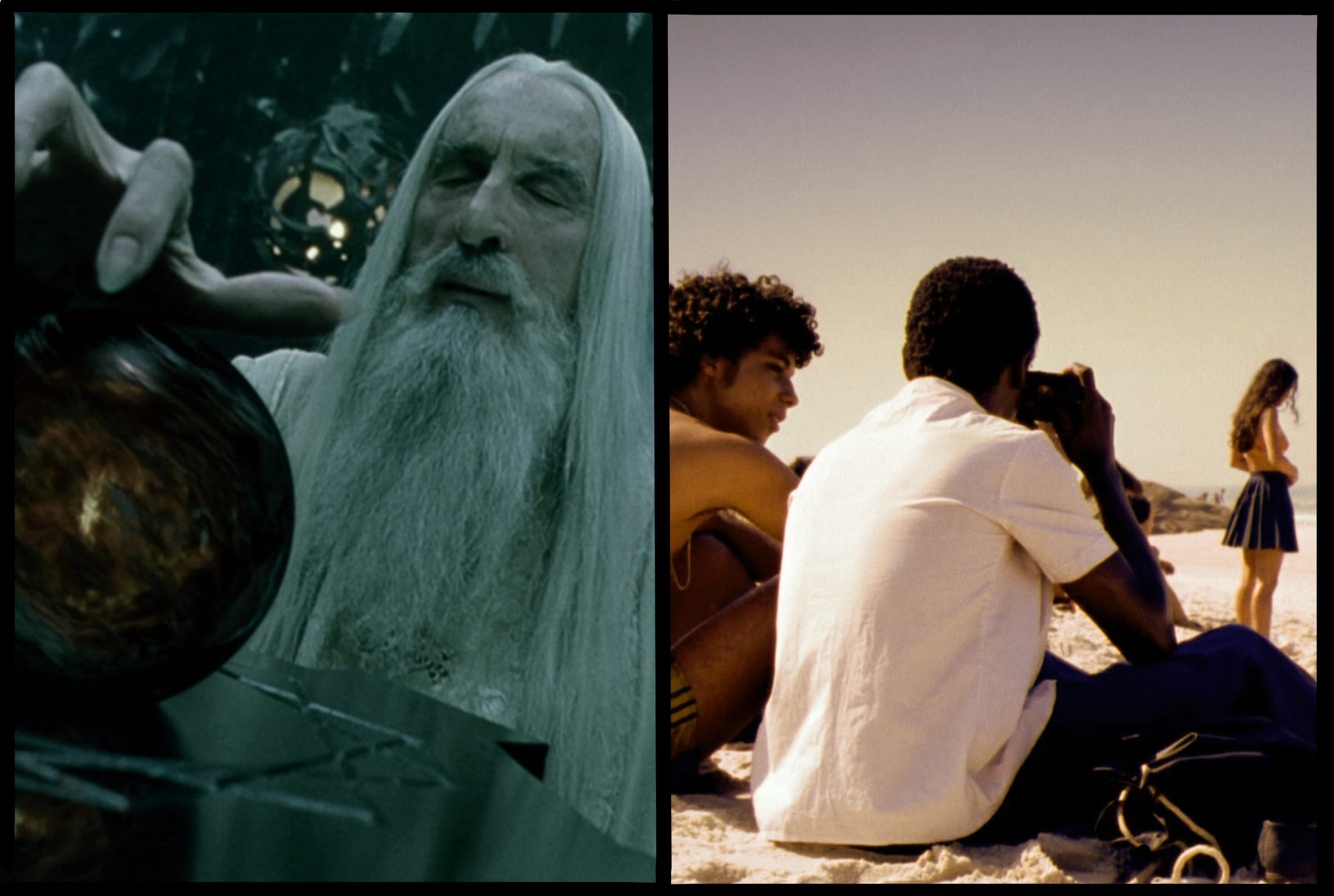
Now and then a wondrous thing happens on Substack; as you’re bouncing from writer to writer, from subject to subject, from format to format - an unexpected connection appears. As disparate as two articles can be, sometimes, and without warning… they start to talk to each other.
Of course, that discussion takes place in the reader’s mind; the brain takes something from one article, then connects it to another. It’s an exclusive event, may not appear anywhere else. It hinges solely on the individual reader.
As I read Dean Blundell’s assessment of the infamous Palantir manifesto, another Substack piece came into my head; a poem, a crônica, by Fabiana Mello. The two couldn’t be more different, but suddenly, to me - they were talking about the same thing.
Dean Blundell’s text digs into the Palantir text with barely contained anger. He basically translates each bullet point from one language to another: Palantir’s weird, smooth-talking, deterministic, smarter-than-thou power tongue, into Blundell’s emotionally charged yet sharp interpretations.
To me this article is further evidence of how a lot of stuff on Substack increasingly feels sharper, deeper, and more personal than anywhere else. Have a look:

So… that may take a few to digest. And while you do, read this:

I don’t know what reading these two pieces one after the other did or didn’t do for you. You may have a completely different experience than I did.
But to me, reading Strange men while still remembering the soothing sound of Palantir’s bullet points… I could sense these two entities struggling with each other. I felt how the manifest caused the pain depicted in the crônica, and I saw how the crônica pleaded with the manifest. One text reveals a system that’s trying to stand on top of humans. In the other text, a human asks the system: why?
One is all about achieving (their version of) greatness, and they’re certain they know how. The other is able to sense the despair and pain of the human experience, and knows not what to do with it.
Mello’s crônica hurls gut-wrenching images at you, stacks them one on top of another, sentences that make it impossible not to see the insanity:
A million and a half years since Homo Erectus and still no invention for profiting from joy?
Or:
If money is a representation of value, then answer me, why does death sell more than life?
Or:
Terrorists without votes steal trucks, terrorists with votes buy tanks.
These sentences give me hope, it connects me to my heart. They make me see and feel the madness, they prevent me from rationalizing it, normalizing it.
Then, there’s the Palantir manifesto. I find it so interesting, and unsettling, that it doesn’t sound unhinged (especially if you compare it to the current Orange Maestro of Unhinged) - and that’s exactly what makes the danger so clear and present:
This wasn’t a random post.
Palantir is not picking a fight with guys like Blundell - they know the libtards of the world will scream, for a while… and then go silent.
Because the real target is not the people who don’t believe in what they’re saying.
They’re unveiling this manifesto to the millions of people THEY ALREADY KNOW ARE ON THEIR SIDE. Palantir is letting them know that the world’s most powerful company has their back.
The Palantir manifesto made the rounds a few months ago, so by newsjacking standards it’s dead. But read it again, and if you haven't read it, inform yourself.
Because there is simply no ceiling to what Palantir can become, no limit to how far their influence can reach.
A dark manifesto on one side, an empathetic poem on the other. A ‘crônica’ is a Brazilian form of poetry, and I’m a bit embarrassed to say that before reading Mello I didn’t know what it was. It’s made me realize how little I know about Brazilian art in general. But now, a door has been opened. How lovely.
The Blundell text and the Mello poem - they couldn’t be farther from each other.
They’re reminders of how we need not just one strategy to cope with our times: we need many. We need the people who excavate facts, who call out sinister agendas. And we need poetry, where we can be angry without hurting anyone, where we can feel the desperation in its fullness without setting off literal bombs.
I want people on fire, who obsess about each and every fact, and I want all the raging crônicas the world can give me.